Audiometric Testing
Onsite workplace hearing tests Sydney & NSW

Audiometric testing Sydney & NSW
Workplace hearing tests conducted onsite
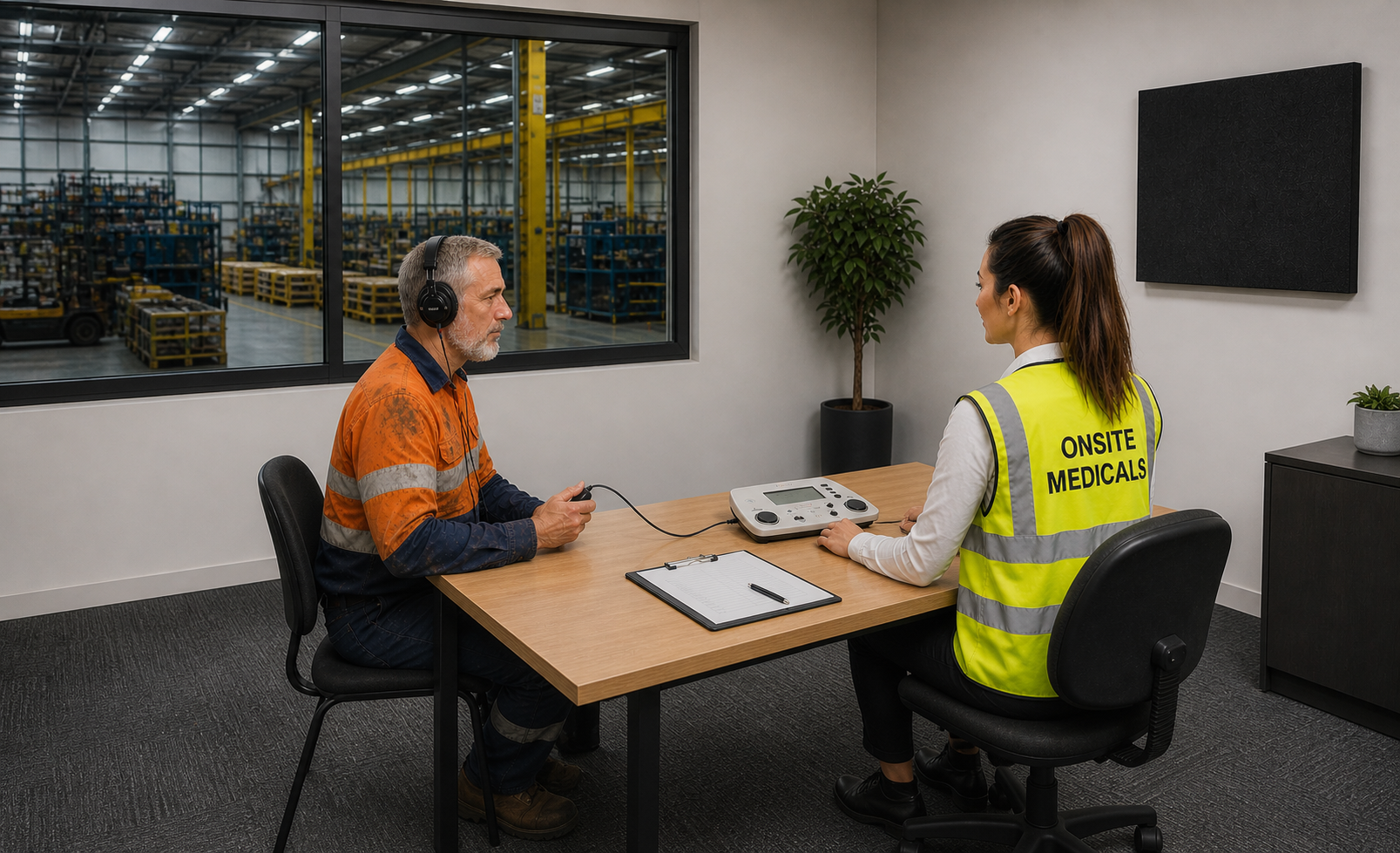
Onsite Medicals provides audiometric testing and workplace hearing tests across Sydney and NSW, with testing conducted at your workplace to make hearing monitoring simple and convenient for your team.
Our on-site hearing testing service is designed for businesses with workers exposed to hazardous workplace noise or required to use hearing protection equipment as a noise control measure. We bring the testing equipment to your site, assess each worker's hearing and provide the audiometric test results and documentation required for your workplace health monitoring program.
Whether you need testing for a small team or a larger workforce, our mobile service helps minimise time away from the job while giving employers a practical way to monitor worker hearing.
Need workplace hearing tests at your Sydney worksite? Contact Onsite Medicals for a quote.

What is an audiometric test?
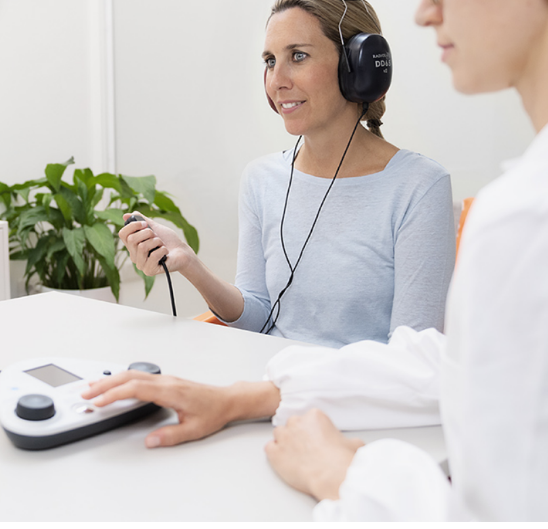
An audiometric test is a hearing test that measures how well a person can hear sounds at different frequencies and volumes.
For workplace health monitoring, pure-tone audiometry is used to establish a worker's hearing thresholds and identify changes in hearing over time. A baseline result can then be compared with future tests to monitor for changes associated with workplace noise exposure.
Workplace hearing assessments can help identify hearing changes early and provide useful information for employers when reviewing noise controls, hearing protection and their broader occupational noise management program.
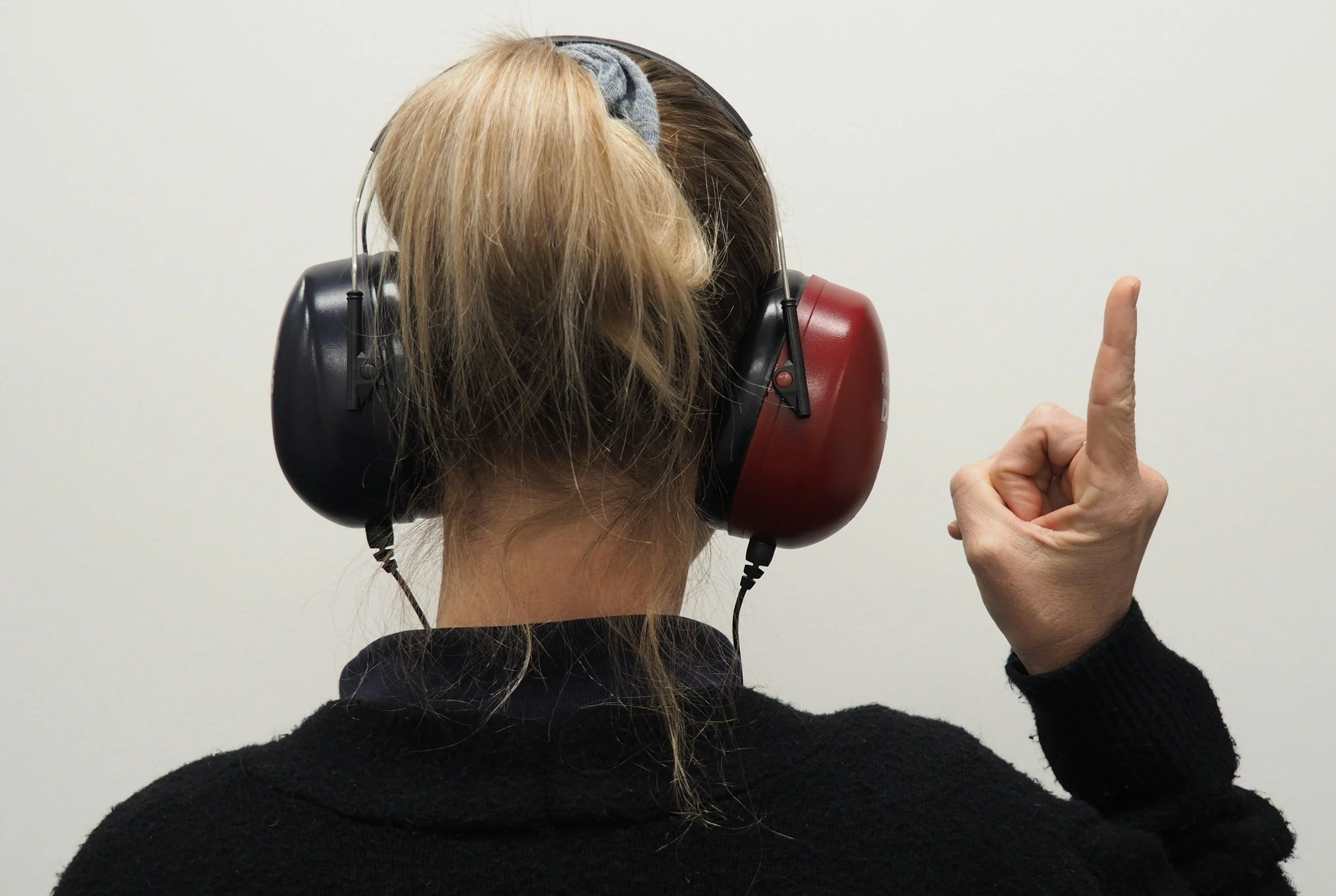
An audiometric test is non-invasive and typically involves the worker responding when they hear a tone through headphones.
Why workplace hearing testing matters
Regular audiometric testing is an important part of managing the risks associated with excessive workplace noise.
A worker may not immediately notice gradual hearing changes, particularly when exposure occurs over a long period. Hearing testing provides an objective record of hearing ability that can be monitored over time.
For employers, a workplace hearing testing program can help to:
Establish a baseline of a worker's hearing
Monitor changes in hearing thresholds over time
Identify possible temporary or permanent hearing changes
Review the effectiveness of existing noise controls
Support the correct selection and use of hearing protection equipment
Meet applicable work health and safety requirements
Audiometric testing does not replace workplace noise controls. It is one part of a broader approach to preventing occupational hearing loss and managing workplace noise.
NSW WHS requirements for audiometric testing – Clause 58
NSW has specific requirements for audiometric testing under Clause 58 of the Work Health and Safety Regulation.
Where a business requires workers to frequently use hearing protection as a control measure for noise that exceeds the exposure standard, the person conducting a business or undertaking (PCBU) must provide those workers with hearing tests.
The current NSW noise exposure standard is:
85 dB(A) averaged over an 8-hour working day
140 dB(C) peak noise level
For workers covered by the Clause 58 audiometric testing requirement:
A baseline hearing test must be provided within 3 months of commencing employment
Follow-up hearing tests must be provided at least every 2 years
More frequent testing may be appropriate where the level of noise exposure or risk warrants it
The PCBU is responsible for organising and paying for the required hearing tests.
For current regulatory guidance, employers should refer to SafeWork NSW and the applicable NSW Work Health and Safety legislation.
Onsite workplace hearing test process
Our mobile service allows your workers to complete their hearing assessments at your workplace, rather than travelling individually to an external clinic.
Before testing begins, we establish a suitable quiet area at your site and ensure the testing environment and equipment are appropriate for audiometric assessment.
The process generally involves:
Setting up in a suitable quiet room or area
Checking the testing environment
Preparing and checking the audiometric equipment
Completing the individual hearing assessment
Recording hearing thresholds across the required frequencies
Reviewing the results against previous baseline information where available
Providing the relevant audiometric test results and documentation
A typical workplace hearing test takes approximately 15 minutes per worker, depending on the individual and the testing requirements.
For larger teams, testing can be organised around your operational requirements to reduce disruption to the workday.

Temporary Threshold Shift (TTS)
A Temporary Threshold Shift (TTS) is a temporary reduction in hearing sensitivity that can occur after exposure to loud noise.
Monitoring for changes in hearing thresholds can provide useful information about a worker's noise exposure and the effectiveness of workplace controls.
Where changes are identified, employers may need to review factors such as:
Noise levels and exposure duration
Engineering and administrative controls
Hearing protection selection
Hearing protection fit and use
Worker training and workplace practices
Identifying changes early gives employers an opportunity to investigate the cause and strengthen their occupational noise management program.
Hearing protection and workplace noise
Hearing protection such as earmuffs and earplugs is an important control when required for workers exposed to hazardous noise. Appropriate hearing protection equipment should be considered within the overall hierarchy of controls rather than as the only measure used to manage noise.
Audiometric testing provides employers with information about workers' hearing over time and can support the ongoing review of their hearing conservation and work health and safety programs.
Where hearing changes are identified, the appropriate response may include reviewing noise controls, checking hearing protection practices and arranging further assessment where necessary.
Industries we service
We provide mobile audiometric testing and workplace hearing assessments for workplaces across Sydney and NSW, including:
Construction and civil works
Manufacturing and production
Engineering
Mining and resources
Transport and logistics
Warehousing and industrial operations
Maintenance and mechanical services
Government and utilities
Other workplaces where hazardous noise is a concern
Because testing is conducted on-site, businesses can arrange hearing assessments around their workforce and operational requirements.
Compliance and reporting
Our workplace hearing testing service is conducted using procedures appropriate for occupational audiometric assessment and in accordance with the relevant requirements, including AS/NZS 1269.4 – Occupational Noise Management, Part 4: Auditory Assessment.
Following testing, employers can receive the relevant audiometric test results and documentation for their workplace health monitoring records.
Where applicable, results can also be used to monitor hearing changes over time by comparison with previous testing.
Maintaining accurate records helps employers manage their occupational noise management and hearing conservation programs and demonstrate that appropriate health monitoring is being undertaken.
Benefits of onsite audiometric testing
Having hearing tests conducted at your workplace can make it considerably easier to maintain a regular testing program.
The key advantages include:
Convenience: Workers are tested at their usual workplace
Less disruption: Short individual appointments reduce time away from normal duties
Efficient group testing: Multiple workers can be assessed during the same site visit
Practical scheduling: Testing can be arranged around your operational requirements
Workplace monitoring: Results can contribute to ongoing hearing surveillance
Sydney & NSW coverage: Mobile testing is available across a broad service area
For employers, the biggest benefit is having a straightforward way to incorporate workplace hearing assessments into an existing work health and safety program.
Book workplace hearing tests in Sydney
Onsite Medicals provides mobile workplace hearing tests and hearing assessments across Sydney and NSW, bringing the testing service directly to your site.
We can assist businesses with individual workers, small teams and larger workplace testing programs.
Contact Onsite Medicals to arrange on-site audiometric testing or request a quote for your workplace.
-
Workers who are regularly exposed to high noise levels (85 dB over 8 hours or peak of 140dB), such as in construction, manufacturing, mining, and industrial settings, require hearing testing as part of workplace health monitoring.
-
Hearing tests are required for workers exposed to hazardous noise levels. a baseline test should be conducted within 3 months of starting work, followed by monitoring at least every 2 years, or more frequently depending on risk.
-
A hearing test typically takes around 10 to 15 minutes per person, making it quick and efficient for workplace testing.
-
If a hearing test indicates potential hearing loss, further assessment may be recommended and workplace controls should be reviewed to reduce noise exposure.